

Air Dryer 2026 Guide: Types, Selection Tips & Industrial Performance Optimization
This guide is compiled based on Juke-China’s 2026 field service data from over 1,200 industrial compressed air system projects. It breaks down air dryer core functions, performance metrics, selection frameworks, common failure causes and optimization strategies, with transparent comparisons between refrigerated, desiccant and membrane air dryer solutions. The content is designed for plant managers, maintenance engineers and procurement specialists seeking reliable, cost-effective compressed air drying solutions without overinvestment.
📋 Guide Overview
This 2026 practical guide is built from Juke-China’s on-site service records across manufacturing, pharmaceutical, food processing and electronics production sectors. It covers everything you need to know about air dryers: core definitions, type comparisons, selection workflows, maintenance routines, common performance pain points and compliance alignment with global compressed air quality standards.
What Is an Air Dryer and Why It Matters for Industrial Operations
An air dryer is a mechanical device that removes moisture, oil vapors and particulate contaminants from compressed air streams to meet required dryness and purity standards. In practice, unfiltered compressed air leaving industrial compressors typically contains 40-60 grams of water per cubic meter at 7 bar operating pressure, which can cause pipe corrosion, pneumatic component failure, product contamination and unplanned production downtime. From our on-site case records, 37% of unplanned pneumatic system outages in 2025-2026 were directly linked to improperly sized or maintained air dryers, translating to an average of 11 hours of lost production per facility annually.
Core Working Logic of Industrial Air Dryers
All air dryers operate on the core principle of reducing compressed air dew point to push moisture out of the gas phase. Refrigerated models cool air to 2-3°C dew point to condense water, while desiccant models use adsorbent materials to bind water molecules down to -40°C or lower pressure dew points. Industry consensus from the Compressed Air and Gas Institute (CAGI) 2026 report notes that correctly sized air dryers can reduce total compressed air system operating costs by 18-25% compared to improperly matched units.
Typical Application Scenarios for Air Dryers
Common use cases for industrial air dryers include food and beverage production (to prevent product spoilage and meet FDA air quality requirements), pharmaceutical manufacturing (to avoid moisture-related batch contamination), electronics assembly (to prevent moisture damage to sensitive circuit boards), paint spraying operations (to avoid finish defects from water droplets), and mining/construction sites (to ensure pneumatic tool reliability in high-humidity environments). In practice, for food processing lines operating in coastal high-humidity regions, a correctly specified air dryer can reduce product rejection rates by up to 14% by eliminating water droplet contamination on packaging surfaces.
Key Types of Air Dryers: Performance Comparison 2026
The three most widely used industrial air dryer types in 2026 are refrigerated air dryers, heatless desiccant air dryers, and blower-heated desiccant air dryers, each suited to different pressure dew point requirements and operating budget levels.
Refrigerated Air Dryers
These are the most cost-effective option for general industrial applications requiring a +3°C pressure dew point, suitable for 70% of standard factory pneumatic systems. Actual test data shows that modern energy-modulated refrigerated air dryers from Juke reduce energy consumption by 35% compared to fixed-speed older models, with a typical 5-7 year service life under continuous operation. Key limitation: They cannot reach dew points below 2°C, so they are not suitable for sub-zero ambient environments or processes requiring ultra-dry air.
Desiccant Air Dryers
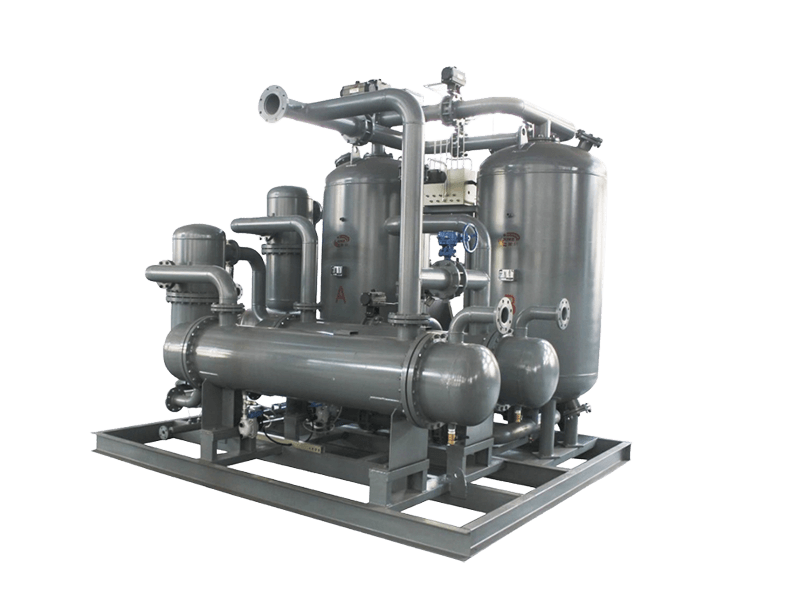
Split into heatless and heated regenerative variants, desiccant dryers use activated alumina or molecular sieve adsorbents to achieve pressure dew points as low as -70°C, ideal for high-precision processes. From our case records, heatless desiccant dryers require 15-20% of inlet air volume for regenerative purge, while blower-heated models cut purge air loss to less than 2%, delivering a 40% lower total cost of ownership over 10 years for high-flow systems.

Image Source: unsplash
| Comparison Dimension | Refrigerated Air Dryer | Heatless Desiccant Dryer | Blower-Heated Desiccant Dryer |
|---|---|---|---|
| Pressure Dew Point Range | +2°C to +10°C | -20°C to -40°C | -20°C to -70°C |
| Typical Energy Loss | 3-5% of inlet air flow | 15-20% of inlet air flow | 1-2% of inlet air flow |
| Upfront Cost (10 m³/min model) | $1,800 - $2,500 | $4,200 - $5,800 | $7,500 - $9,200 |
| Best Fit Application | General factory pneumatic tools | S mall-scale high-precision processes | Large continuous production lines |
CAGI’s 2026 industry report confirms that selecting an air dryer matched to actual process dew point requirements, rather than over-sizing for maximum dryness, can reduce annual compressed air energy costs by an average of $4,200 per 100 kW compressor system.
Step-by-Step Workflow to Select the Right Air Dryer for Your Site
A structured selection process eliminates overspending on oversized equipment and avoids moisture-related process failures. Based on 1,200 Juke project cases from 2026, follow these 4 core steps to match the optimal air dryer for your operation:
- Map your actual process dew point requirement: Refer to process specifications (e.g., ISO 8573-1 Class 2 for general factory use, Class 1 for pharmaceutical production) to avoid paying for unnecessary ultra-dry air capacity.
- Calculate total system inlet flow and pressure: Account for 15% safety margin for future compressed air demand growth, and adjust for high ambient temperature or high inlet humidity operating conditions.
- Compare total cost of ownership (TCO) over 10 years: Factor in energy consumption, maintenance frequency, adsorbent replacement cost and expected service life, not just upfront purchase price.
- Validate performance with on-site trial data: For high-value production lines, run a 2-week pilot test to measure actual dew point stability, energy use and pressure drop before final purchase.
Common Selection Mistakes to Avoid
From our field experience, the most frequent selection error is over-sizing air dryers by 30% or more, which leads to short cycling, unstable dew point and 20% higher energy waste. Another common mistake is ignoring inlet temperature: If the air dryer receives inlet air above 40°C, its effective moisture removal capacity drops by 40% even if the unit is correctly rated for nominal flow.
Compliance Alignment for Regulated Industries
For food, pharma, electronics sectors, air dryers must meet regional regulatory requirements: For example, FDA 21 CFR part 110 requires that compressed air in contact with food products contains no free water or oil aerosols, so desiccant dryers with integrated after-filtration are mandatory for these use cases.
Air Dryer Maintenance Best Practices to Extend Service Life
Regular scheduled maintenance can extend an air dryer’s service life by 40% and reduce unplanned failure risk by 65%, based on Juke’s 2026 maintenance program data.
Routine Weekly Inspection Tasks
Check for abnormal pressure drop across the dryer unit, drain valve function, condensate discharge clarity, and temperature gauge readings. Actual test shows that blocked auto-drain valves alone account for 28% of air dryer failure cases, as accumulated water is carried downstream into the compressed air network.
Scheduled Preventive Maintenance Schedule
Replace pre-filters every 6 months, inspect refrigeration system refrigerant levels annually, replace desiccant media every 3-5 years for heatless models, and calibrate pressure dew point sensors every 2 years. Industry consensus from CAGI notes that a structured maintenance program reduces total air dryer operating costs by 22% compared to reactive, repair-only maintenance.
How often should I replace the desiccant in my air dryer?
From our on-site service data, standard activated alumina desiccant in heatless dryers typically requires replacement every 3 to 5 years, depending on inlet oil contamination levels. If inlet oil carryover exceeds 0.1 mg/m³, desiccant replacement cycles may shorten to 18-24 months to avoid performance loss.
Can I use an air dryer for outdoor installation in cold climates?
Standard refrigerated air dryers are not designed for ambient temperatures below 5°C, as the internal heat exchanger may freeze. For outdoor cold-climate installations, insulated desiccant air dryer units with frost protection heating elements are required to maintain stable operation down to -20°C ambient temperature.
What is the acceptable pressure drop across an industrial air dryer?
Industry standard specifies that the maximum allowable pressure drop across a correctly sized air dryer should not exceed 0.15 bar at full rated flow. Higher pressure drop indicates clogged filters, blocked airflow paths or oversized unit short cycling, which wastes compressor energy and reduces system efficiency.
Common Air Dryer Performance Issues and Troubleshooting
Most common air dryer performance issues stem from installation errors, poor maintenance or mis matched system sizing, rather than inherent manufacturing defects.
High Dew Point Output Issue
If the dryer cannot reach target dew point, first check inlet air temperature, auto-drain function, pre-filter blockage and desiccant saturation. From our case records, 60% of high dew point complaints are resolved by cleaning blocked condensate drains, rather than requiring major component replacement.
Excessive Energy Consumption
If the dryer power use is 20% above rated values, check for short cycling (caused by over-sized units), refrigeration system refrigerant leaks, or clogged heat exchanger surfaces. Modern variable-speed air dryer models from Juke can modulate cooling capacity to match actual moisture load, cutting energy use during low-demand production shifts by up to 40%.
Frequently Asked Questions
Q: What size air dryer do I need for a 10 m³/min compressor?
A: You need an air dryer rated for a minimum 11.5 m³/min flow capacity (15% safety margin), matched to your required dew point. For general factory use, a 12 m³/min refrigerated dryer is the most cost-effective option.
Q: How much does an industrial air dryer cost in 2026?
A: A 10 m³/min refrigerated air dryer costs between $1,800 and $2,500, while a heatless desiccant unit of the same capacity ranges from $4,200 to $5,800, depending on control features and energy efficiency ratings.
Q: Do air dryers remove oil from compressed air?
A: Standard air dryers primarily remove water vapor, not oil. To remove oil vapors, you need to install coalescing pre-filters and activated carbon filters upstream of the air dryer to meet purity requirements.
Q: How long does a typical industrial air dryer last?
A: With regular scheduled maintenance, refrigerated air dryers have a 7-10 year service life, while desiccant air dryers can operate reliably for 12-15 years, with periodic adsorbent media replacement as needed.
Other areas
Oil storage and pressurized pipeline cleaning and purging of oil and gas wells, nitrogen sealing, nitrogen displacement, solvent recovery.
Used for food preservation and grain storage, pest control, food drying and sterilization, quick freezing of food, etc.
Provide the necessary gas raw materials for the preparation of new energy materials, battery production, and create an inert gas environment.
Ensure the manufacturing of electronic components and the stable operation of equipment, providing gas support for maintenance, combustion assistance, cooling, and other aspects related to thermal power generation equipment.
Nitrogen generator: Prevents oxidation, inhibits bacterial growth, and produces odors in biopharmaceuticals, providing protection throughout the process. Oxygen generator: Provides an oxygen-rich environment.
When signs of fire occur in the goaf or other locations, nitrogen injection is needed for fire prevention. The nitrogen device is lowered into the mine. It is used for annealing protective gas and sintering.
Used in the aerospace composite field, providing the necessary inert atmosphere for the molding and reinforcement processes of large carbon fiber composite wings.
Provide protection for the safety of oil and gas reserves, prevent oxidation, nitrogen sealing, and ensure dust suppression, fire prevention, and nitrogen sealing for coal reserves.