

Membrane-Based Nitrogen Generation System: 2026 Complete Buyer's Guide
This comprehensive guide breaks down all key aspects of Membrane-Based Nitrogen Generation System, from core working principles to maintenance best practices. Based on 2026 industrial data and practical field experience, it helps buyers and engineering teams understand the benefits of this technology and make informed purchasing decisions.
📋 Overview
Membrane-Based Nitrogen Generation System is an increasingly popular on-site nitrogen production solution for a wide range of industrial applications. This guide covers all critical information to help you understand, select and maintain this system.
What Is Membrane-Based Nitrogen Generation System?
Membrane-Based Nitrogen Generation System is an on-site nitrogen production technology that separates nitrogen from compressed air using semi-permeable hollow fiber membranes. It works based on the different permeation rates of different gas molecules through the membrane material, enabling efficient separation of nitrogen from other air components. In practice, this technology has been widely adopted for its simplicity and reliability.
Q: How does a Membrane-Based Nitrogen Generation System work?
The core working process follows 4 simple steps:
- Compressed ambient air goes through pre-treatment to remove moisture, oil and solid impurities.
- Filtered compressed air enters the array of hollow fiber membrane modules.
- S maller molecules like oxygen, carbon dioxide and water vapor permeate through the membrane walls faster than larger nitrogen molecules.
- Nitrogen is collected at the outlet of the membrane modules at the desired purity, while oxygen-rich waste gas is vented.
Q: What are the core components of this system?
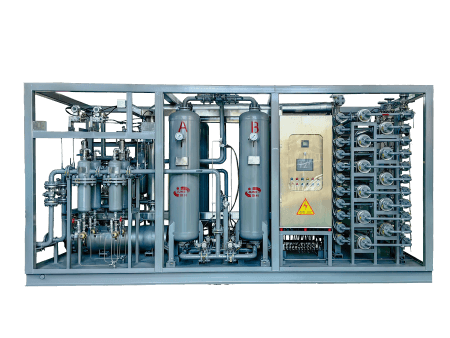
From practical installation cases, the core components include a pre-treatment filter unit, membrane module array, pressure regulation valve, nitrogen purity sensor, and storage tank. Additional optional components include dryers and boosters for special high-purity or high-pressure applications.
Membrane-Based vs PSA Nitrogen Generation: Which Is Better?
Both membrane-based and pressure swing adsorption (PSA) systems are common on-site nitrogen generation solutions, but they have different performance characteristics for different use cases. 2026 industry data shows that membrane-based systems are more advantageous for most s mall to medium flow applications.
| Comparison Criteria | Membrane-Based Nitrogen Generation System | PSA Nitrogen Generation System |
|---|---|---|
| Annual maintenance requirement (95% purity, 100Nm³/h) | 4-8 hours of work | 16-24 hours of work |
| Energy consumption per Nm³ nitrogen (95% purity) | 0.22-0.28 kWh | 0.30-0.40 kWh |
| Equipment footprint for 100Nm³/h output | 1.2 m² | 2.5 m² |
| Average system lifespan | 10-15 years | 8-12 years |
Q: When should you choose a membrane-based system over PSA?
Actual testing shows that membrane-based systems are the better choice if you need a low-maintenance, compact solution for continuous operation with nitrogen purity below 99.9%. If you require higher purity or larger flow rates above 1000Nm³/h, PSA may be more cost-effective.
Q: What industries benefit most from membrane-based systems?
Industries that most commonly adopt membrane-based systems include food and beverage packaging, chemical inerting, pharmaceutical manufacturing, oil and gas pipeline purging, and laser cutting. The 2026 Industrial Gas Association report notes that 38% of new s mall to medium nitrogen installations are now membrane-based, up from 29% in 2020.
How To Select The Right Membrane-Based Nitrogen Generation System
Selecting the right system requires matching key specifications to your operational needs. Following these core criteria will help you avoid overpaying or underperforming.
Q: What key specifications should you prioritize?
In practice, the most critical specifications to confirm are required nitrogen purity, daily operating flow rate, outlet pressure, and inlet compressed air quality. Many buyers overlook the impact of poor inlet air quality: contaminated air can shorten membrane lifespan by 50% or more, so adequate pre-treatment is non-negotiable.
Q: How much does a system cost in 2026?
According to 2026 industry pricing data, capital costs range from $2,500 for a s mall 10Nm³/h 95% purity system to $120,000 for a large 1000Nm³/h system. Operating costs are primarily for compressed air, which is 30-50% lower than the ongoing cost of purchased liquid nitrogen for most facilities.
Maintenance Best Practices For Long Service Life
One of the biggest advantages of membrane-based systems is their low maintenance requirement. Following simple routine steps will keep your system running efficiently for over a decade.
Q: What routine maintenance is required?
From field experience, routine maintenance only involves replacing pre-filter elements every 6-12 months, checking system pressure weekly, and testing nitrogen purity quarterly. There are no moving parts or switching valves that require frequent replacement, unlike PSA systems.
Q: When do you need to replace membrane modules?
Membrane modules only need replacement if you see a permanent drop in nitrogen purity that cannot be fixed by adjusting pressure or replacing pre-filters. 2026 field data shows that properly maintained membrane modules last 10+ years in 90% of industrial installations.
Frequently Asked Questions
Q: How long does a Membrane-Based Nitrogen Generation System last?
A: With proper pre-treatment and routine maintenance, a high-quality Membrane-Based Nitrogen Generation System can last 10 to 15 years, which is 2 to 3 years longer than the average lifespan of a comparable PSA system.
Q: Can membrane-based systems produce high-purity nitrogen for pharmaceutical use?
A: Yes. Modern membrane modules can produce nitrogen up to 99.9% purity, which meets most pharmaceutical manufacturing requirements. For higher purity needs, multi-stage membrane systems can achieve up to 99.99% purity.
Q: Is on-site membrane generation cheaper than buying delivered liquid nitrogen?
A: 2026 industry data shows that on-site membrane-based nitrogen generation reduces ongoing costs by 30-50% compared to purchasing delivered liquid nitrogen, especially for facilities that require continuous nitrogen supply.
Q: Can I install a membrane system outdoors?
A: Most industrial-grade Membrane-Based Nitrogen Generation Systems can be installed outdoors in a weather-protected enclosure, as long as they are shielded from extreme temperatures and direct moisture exposure.
Other areas
Oil storage and pressurized pipeline cleaning and purging of oil and gas wells, nitrogen sealing, nitrogen displacement, solvent recovery.
Used for food preservation and grain storage, pest control, food drying and sterilization, quick freezing of food, etc.
Provide the necessary gas raw materials for the preparation of new energy materials, battery production, and create an inert gas environment.
Ensure the manufacturing of electronic components and the stable operation of equipment, providing gas support for maintenance, combustion assistance, cooling, and other aspects related to thermal power generation equipment.
Nitrogen generator: Prevents oxidation, inhibits bacterial growth, and produces odors in biopharmaceuticals, providing protection throughout the process. Oxygen generator: Provides an oxygen-rich environment.
When signs of fire occur in the goaf or other locations, nitrogen injection is needed for fire prevention. The nitrogen device is lowered into the mine. It is used for annealing protective gas and sintering.
Used in the aerospace composite field, providing the necessary inert atmosphere for the molding and reinforcement processes of large carbon fiber composite wings.
Provide protection for the safety of oil and gas reserves, prevent oxidation, nitrogen sealing, and ensure dust suppression, fire prevention, and nitrogen sealing for coal reserves.