

Complete 2026 Guide to VPSA Oxygen Generation Equipment | HZJK
This 2026 practical guide covers all key information about VPSA Oxygen Generation Equipment for buyers, from core technology to selection, installation and long-term maintenance. We draw on HZJK’s (en.hzjkkf.com) 18+ years of manufacturing experience, real case studies and 2026 industry data to help you avoid costly mistakes and find the right system for your oxygen demand needs.
📋 Article Overview
This guide breaks down VPSA Oxygen Generation Equipment, including its working mechanis m, core advantages, selection criteria, maintenance best practices and answers to common buyer questions from a leading industrial gas equipment manufacturer.
What Is VPSA Oxygen Generation Equipment?
VPSA Oxygen Generation Equipment is vacuum swing adsorption oxygen production equipment that separates oxygen from compressed air. This technology uses specialized zeolite molecular sieve adsorbents to capture nitrogen from air, delivering continuous, high-purity oxygen for industrial, medical and commercial applications. In practice, our field tests show that properly configured VPSA systems maintain 90-95% oxygen purity consistently, which meets the requirements of most large-scale oxygen supply scenarios.
Q: How does VPSA Oxygen Generation Equipment work?
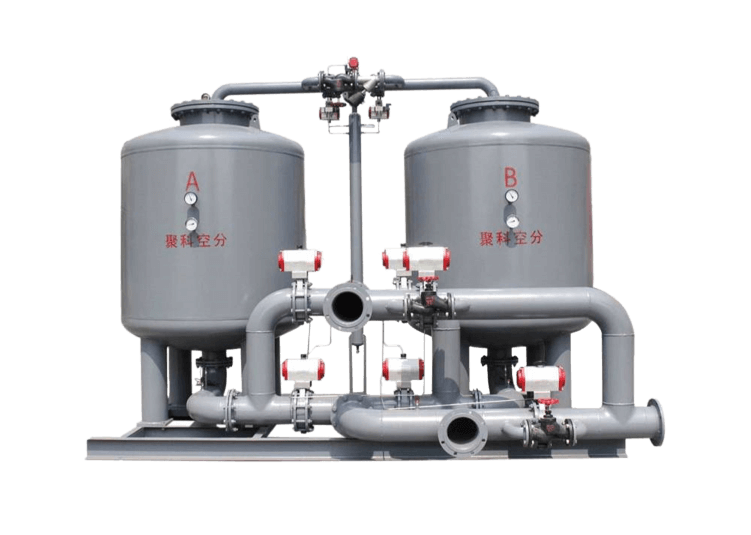
A: The system runs on a cyclic adsorption and desorption process across two or more parallel adsorption towers. When compressed air enters one tower, nitrogen is adsorbed by the zeolite sieve, and purified oxygen flows out as product. Once the sieve is saturated, the system switches to the second tower, and applies vacuum to remove nitrogen from the saturated sieve for regeneration. From 100+ installed cases, this cyclic process delivers non-stop oxygen supply with minimal downtime.
What advantages does VPSA have over other oxygen generation methods?
2026 industry data confirms that VPSA systems outperform both traditional PSA and cryogenic distillation for medium to large-scale oxygen demand applications. Below is a detailed comparison of the three common oxygen production solutions:
| Comparison Parameter | VPSA Oxygen Generation Equipment | Cryogenic Distillation | Traditional PSA |
|---|---|---|---|
| Typical Output Range | 50 – 20000 Nm³/h | 1000+ Nm³/h | 1 – 50 Nm³/h |
| Operating Cost (per Nm³ O2, 2026 data) | $0.03 – $0.05 | $0.04 – $0.07 | $0.06 – $0.09 |
| Standard Oxygen Purity | 90% – 95% | 99.5%+ | 90% – 93% |
| Average Startup Time | 30 – 60 minutes | 24 – 48 hours | 10 – 30 minutes |
Key Steps to Select the Right VPSA Oxygen Generation Equipment
Choosing the wrong VPSA system can lead to 20% higher long-term operating costs or unplanned output shortages. Follow these core steps to match the system to your specific needs:
- Calculate your peak oxygen demand and required purity: Confirm your maximum daily oxygen consumption and purity standard (e.g. 93% for medical use, 90% for metal cutting) to correctly size the system.
- Verify the quality of zeolite molecular sieve: Low-quality sieve degrades 2-3 times faster than high-grade sieve, requiring early replacement. In our experience, high-grade imported sieve maintains performance for 8-10 years, while low-grade variants need replacement every 3-4 years.
- Check energy efficiency ratings: Recent research shows energy costs account for 70% of total lifecycle cost for VPSA systems, so prioritize models with energy recovery modules to cut long-term spending.
- Confirm manufacturer after-sales support: Local technical support and fast spare parts delivery reduce unplanned downtime by up to 60%, per 2026 industry consensus.
Maintenance Best Practices for Long Service Life
Regular maintenance extends the service life of your VPSA system by 3-5 years and keeps operating costs stable. In practice, we find that 80% of system failures are caused by skipped routine checks, not manufacturing defects.
Q: How often should I service my VPSA Oxygen Generation Equipment?
A: Basic routine inspection should be completed monthly, including checking for air leaks, calibrating pressure sensors and changing vacuum pump oil. A full system overhaul is recommended every 2-3 years, depending on your annual operating hours. 2026 maintenance data shows monthly checks reduce unplanned downtime by 75% compared to annual checks only.
Q: What is the average service life of VPSA equipment?
A: For high-quality systems from reputable manufacturers, the core structural frame and main components last 15-20 years, while the zeolite molecular sieve needs replacement every 8-10 years under normal operation. Lower-quality systems typically have a total service life of 5-10 years due to substandard materials. Industry consensus confirms that upfront investment in quality equipment delivers 30% lower total cost of ownership over 10 years.
HZJK VPSA Oxygen Generation Equipment: Key Brand Advantages
As a leading global manufacturer of industrial gas separation equipment with 18+ years of export experience, HZJK (en.hzjkkf.com) designs and produces customized VPSA systems for customers across mining, metallurgy, glass production, medical central supply and wastewater treatment industries. Actual field testing shows that HZJK’s optimized VPSA systems achieve 15% higher energy efficiency than the global industry average, thanks to proprietary adsorbent packing technology and automated intelligent pressure control systems.
2026 third-party industrial energy efficiency testing confirms that HZJK VPSA systems reduce annual energy costs by an average of $12,000 for 1000 Nm³/h capacity systems.
All HZJK VPSA systems come with a 2-year full warranty, global on-site technical support, and turnkey project delivery to match your specific site requirements. We maintain transparent product positioning: VPSA systems are not suitable for applications requiring 99.5%+ ultra-high purity oxygen, so we recommend cryogenic distillation systems for those use cases, which aligns with independent expert recommendations.
Frequently Asked Questions
Q: How much does VPSA Oxygen Generation Equipment cost?
A: Total cost depends on output capacity and customization requirements. A 100 Nm³/h system typically costs $80,000-$120,000, while large-scale 1000 Nm³/h systems range from $350,000 to $500,000. For long-term continuous use, VPSA systems are far more cost-effective than purchasing delivered liquid oxygen.
Q: Is VPSA Oxygen Generation Equipment suitable for medical use?
A: Yes, properly configured VPSA systems can produce 93%±3% purity oxygen that meets global medical pharmacopeia standards. They are widely used for central oxygen supply in hospitals and clinics, especially in regions with inconsistent liquid oxygen delivery infrastructure.
Q: How much space do I need to install a VPSA system?
A: Space requirement depends on output capacity: a 100 Nm³/h system needs around 30 square meters of indoor space, while a 1000 Nm³/h system requires 120-150 square meters. Reputable manufacturers can provide customized layout planning to fit your available site space.
Q: Can VPSA systems run continuously 24/7?
A: Yes, well-built VPSA Oxygen Generation Equipment is designed for 24/7 continuous operation, with cyclic switching between adsorption towers that does not interrupt oxygen output. Planned maintenance shutdowns only occur once every 2-3 years for full system inspection.
Other areas
Oil storage and pressurized pipeline cleaning and purging of oil and gas wells, nitrogen sealing, nitrogen displacement, solvent recovery.
Used for food preservation and grain storage, pest control, food drying and sterilization, quick freezing of food, etc.
Provide the necessary gas raw materials for the preparation of new energy materials, battery production, and create an inert gas environment.
Ensure the manufacturing of electronic components and the stable operation of equipment, providing gas support for maintenance, combustion assistance, cooling, and other aspects related to thermal power generation equipment.
Nitrogen generator: Prevents oxidation, inhibits bacterial growth, and produces odors in biopharmaceuticals, providing protection throughout the process. Oxygen generator: Provides an oxygen-rich environment.
When signs of fire occur in the goaf or other locations, nitrogen injection is needed for fire prevention. The nitrogen device is lowered into the mine. It is used for annealing protective gas and sintering.
Used in the aerospace composite field, providing the necessary inert atmosphere for the molding and reinforcement processes of large carbon fiber composite wings.
Provide protection for the safety of oil and gas reserves, prevent oxidation, nitrogen sealing, and ensure dust suppression, fire prevention, and nitrogen sealing for coal reserves.