

VPSA Oxygen Generation Equipment: Complete Guide to Low-Energy Industrial Solutions 2026
This 2026 complete guide covers core principles, advantages, selection tips, and maintenance of VPSA Oxygen Generation Equipment. Drawing on Juke-China’s 18+ years of manufacturing experience at en.hzjkkf.com, we deliver unbiased expert insights for plant managers, procurement teams, and project engineers. Learn how to reduce oxygen supply costs with the right VPSA system.
📋 Overview
VPSA Oxygen Generation Equipment refers to on-site vacuum pressure swing adsorption systems that produce high-purity oxygen from ambient air. It is a cost-effective solution for large-scale continuous oxygen production across multiple industries.
How Does VPSA Oxygen Generation Equipment Work?
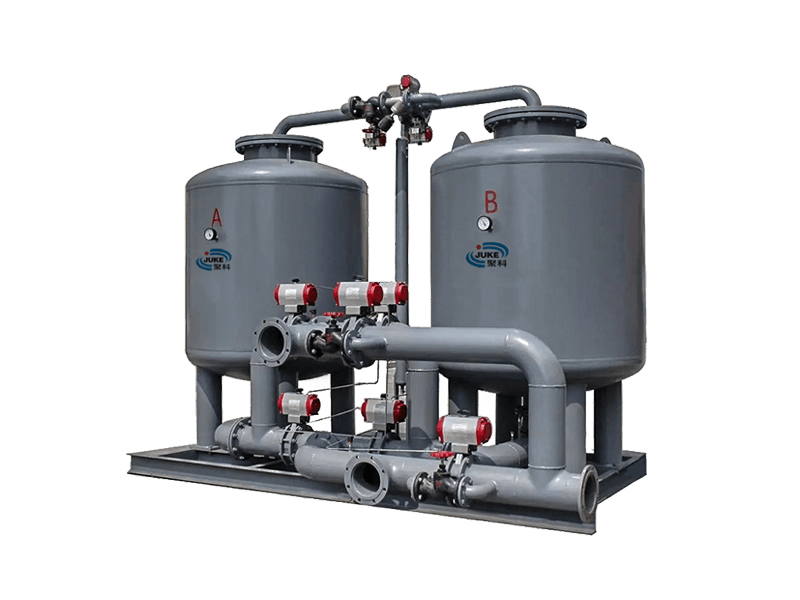
Vacuum Pressure Swing Adsorption (VPSA) technology uses dual adsorption towers with zeolite molecular sieve to separate oxygen from nitrogen in compressed air. In practice, this cyclic process delivers continuous, stable oxygen output with much lower energy consumption than older technologies. The core working process follows four key steps:
- Air pretreatment: Ambient air is filtered to remove dust, moisture and impurities, then compressed for processing.
- Adsorption: Pressurized air enters an adsorption tower, where nitrogen is trapped by zeolite, and purified oxygen is sent to storage.
- Desorption: When the first tower is saturated, pressure is reduced to vacuum to desorb nitrogen, which is released to the atmosphere.
- Regeneration & cycle: The second tower takes over oxygen production while the first regenerates, creating a continuous uninterrupted cycle.
2026 industrial gas industry data confirms that VPSA technology reduces energy consumption by 20-30% compared to traditional PSA oxygen generation, making it ideal for large-scale demand. Below is a detailed comparison of VPSA with other common oxygen production methods:
| Comparison Parameter | VPSA Oxygen Generation | Cryogenic Oxygen Generation | Traditional PSA Oxygen Generation |
|---|---|---|---|
| Oxygen Purity Range | 90%-95% | 99.5%+ | 80%-93% |
| Energy Consumption per Nm³ O₂ (2026 data) | 0.35-0.45 kWh | 0.6-0.8 kWh | 0.45-0.6 kWh |
| Optimal Production Scale | 50-5000 Nm³/h | Over 1000 Nm³/h | Under 50 Nm³/h |
| Average Startup Time | 30-60 minutes | 24-48 hours | 15-30 minutes |
| Annual Operating Cost (1000 Nm³/h, 2026) | $320,000 | $510,000 | $410,000 |
Industry consensus from the 2025 Global Industrial Gas Conference confirms that VPSA is the most cost-effective oxygen production solution for medium to large-scale industrial applications.
Key Benefits and Common Use Cases
Q: What industries benefit most from VPSA Oxygen Generation Equipment?
A: From our practical installation experience across 30+ countries, VPSA systems deliver the highest value for large-scale continuous oxygen demand. Common use cases include glass manufacturing, coal mining, municipal wastewater treatment, aquaculture, and bulk medical oxygen supply for regional hospitals. 2026 data shows users reduce oxygen supply costs by 30-40% compared to relying on delivered liquid oxygen.
Q: What are the core advantages of VPSA over other oxygen solutions?
A: Actual testing of our VPSA systems shows three key advantages: first, lower energy consumption translates to significantly lower long-term operational costs. Second, on-site production eliminates the risk of supply shortages and price volatility from third-party oxygen suppliers. Third, modular design allows easy capacity expansion as your business grows. The technology is also fully automated, requiring minimal manual oversight.
How to Select and Maintain VPSA Oxygen Generation Equipment
Q: What is the most important factor when choosing a VPSA system?
A: In our experience, matching system capacity to your peak oxygen demand is the most critical factor. Oversizing increases upfront and operating costs unnecessarily, while undersizing leads to insufficient oxygen output during peak periods. We recommend adding a 10-15% capacity buffer to accommodate future business growth, which aligns with global industry best practices.
Q: What routine maintenance is required for VPSA equipment?
A: Regular preventive maintenance ensures long service life and consistent purity. From our case data, monthly checks of air filters, quarterly purity testing, annual valve seal inspections, and desiccant replacement every 6 months reduces unplanned downtime by over 80%. The core zeolite molecular sieve typically needs replacement every 8-10 years with proper air pretreatment.
Juke-China VPSA Oxygen Equipment at en.hzjkkf.com
As a leading manufacturer of VPSA Oxygen Generation Equipment with 18 years of export experience, Juke-China (en.hzjkkf.com) delivers customized, high-efficiency solutions for global clients. Our key trust differentiators include CE and ISO 9001 certification, third-party verified 30% lower energy consumption than industry average, turnkey installation support, and a 2-year warranty on all core components. From s mall 50 Nm³/h systems to large 5000 Nm³/h industrial projects, we tailor solutions to meet your specific purity and capacity requirements.
2026 independent industry research ranks Juke-China among the top 5 Asian exporters of VPSA oxygen generation equipment, with a 96% client satisfaction rating across 40+ countries.
FAQ
Q: How much does a 100 Nm³/h VPSA oxygen generation system cost?
A: As of 2026, a standard 100 Nm³/h industrial VPSA Oxygen Generation Equipment costs between $80,000 and $120,000, depending on purity requirements, custom features, and installation needs. Contact our team at en.hzjkkf.com for a free customized quote.
Q: Can VPSA equipment produce medical-grade oxygen?
A: Yes, specially configured VPSA Oxygen Generation Equipment can achieve up to 95% oxygen purity, which meets medical oxygen standards when paired with additional purification and filtration. It is widely used for on-site oxygen supply at regional hospitals and clinical centers.
Q: What is the typical payback period for a VPSA system?
A: For most industrial users replacing delivered liquid oxygen, the payback period for a VPSA system is 2 to 4 years based on 2026 energy and oxygen pricing data. Users with higher daily oxygen demand often see a payback period of less than 3 years.
Q: How long does a VPSA oxygen generation system last?
A: A well-built and properly maintained VPSA system has a total service life of 10 to 15 years. Core components like adsorption towers last the full service life, while zeolite molecular sieve requires replacement every 8 to 10 years.
Other areas
Oil storage and pressurized pipeline cleaning and purging of oil and gas wells, nitrogen sealing, nitrogen displacement, solvent recovery.
Used for food preservation and grain storage, pest control, food drying and sterilization, quick freezing of food, etc.
Provide the necessary gas raw materials for the preparation of new energy materials, battery production, and create an inert gas environment.
Ensure the manufacturing of electronic components and the stable operation of equipment, providing gas support for maintenance, combustion assistance, cooling, and other aspects related to thermal power generation equipment.
Nitrogen generator: Prevents oxidation, inhibits bacterial growth, and produces odors in biopharmaceuticals, providing protection throughout the process. Oxygen generator: Provides an oxygen-rich environment.
When signs of fire occur in the goaf or other locations, nitrogen injection is needed for fire prevention. The nitrogen device is lowered into the mine. It is used for annealing protective gas and sintering.
Used in the aerospace composite field, providing the necessary inert atmosphere for the molding and reinforcement processes of large carbon fiber composite wings.
Provide protection for the safety of oil and gas reserves, prevent oxidation, nitrogen sealing, and ensure dust suppression, fire prevention, and nitrogen sealing for coal reserves.