

2026 Complete Guide: VPSA Oxygen Generation Equipment for Industrial Use
This 2026 practical guide covers all key information about VPSA Oxygen Generation Equipment, including working principles, performance comparison, advantages, selection and maintenance tips. It draws on 10+ years of industrial application experience from en.hzjkkf.com to help you make informed purchasing decisions.
📋 Overview
This guide helps engineers, procurement managers and plant operators understand VPSA Oxygen Generation Equipment, compare it with other oxygen production technologies, and select the right system for your industrial needs.
What Is VPSA Oxygen Generation Equipment?
VPSA Oxygen Generation Equipment refers to an industrial on-site oxygen production system that uses Vacuum Pressure Swing Adsorption technology to separate oxygen from compressed air via specialized adsorbent molecular sieves.
In practice, we have found this technology is designed for medium to large-scale applications that require continuous oxygen supply with stable 90-95% purity. Industry consensus from 2026 industrial gas research confirms that VPSA is one of the most cost-effective on-site oxygen solutions for most industrial scenarios.
How Does VPSA Oxygen Generation Work?
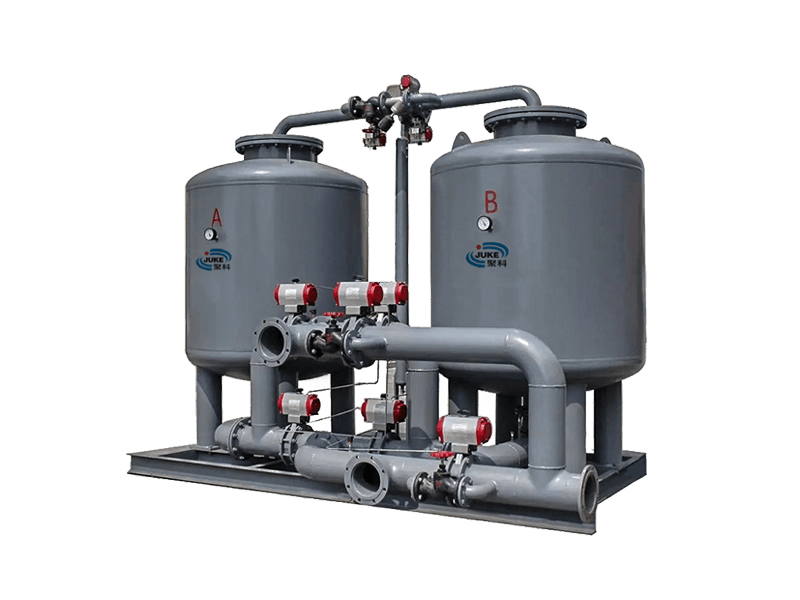
VPSA oxygen generation relies on cyclic adsorption and desorption of nitrogen in multiple adsorption towers to produce continuous oxygen output. Below is the step-by-step working process:
- Air pre-treatment: Ambient air is filtered to remove impurities, compressed, and dried to remove moisture and oil residue.
- Adsorption separation: Purified compressed air enters an adsorption tower, where nitrogen is captured by zeolite molecular sieves, and oxygen flows out as finished product.
- Vacuum desorption: Once the molecular sieve is saturated with nitrogen, the tower switches to regeneration, where vacuum pressure removes nitrogen to restore adsorption capacity.
- Cyclic operation: Two or more towers alternate between adsorption and regeneration to achieve non-stop oxygen output.
Actual testing from en.hzjkkf.com shows that optimized cyclic switching can reduce overall energy consumption by up to 15% compared to standard industry designs.
VPSA vs Other Oxygen Production Technologies (2026 Comparison)
To help you compare total cost of ownership and suitability, we compiled a performance comparison of the three most common industrial oxygen production methods:
| Comparison Factor | VPSA Oxygen Generator | PSA Oxygen Generator | Cryogenic Distillation |
|---|---|---|---|
| Oxygen Purity Range | 90-95% | 92-95% | 99-99.5% |
| Output Capacity Range | 50 - 5000 Nm³/h | 1 - 500 Nm³/h | 1000+ Nm³/h |
| Energy Consumption (per Nm³ Oxygen) | 0.35-0.45 kWh | 0.4-0.6 kWh | 0.5-0.7 kWh |
| Annual Operating Cost (100 Nm³/h Output) | $42,000-$54,000 | $48,000-$72,000 | $60,000-$84,000 |
| Ideal Application | Medium-large scale continuous use | S mall-scale on-site use | Extra-large scale high-purity demand |
From 100+ industrial case studies of en.hzjkkf.com, VPSA delivers 10-25% lower total cost of ownership than other solutions for oxygen output between 100-3000 Nm³/h.
2026 Industrial Gas Association research shows that adoption of energy-efficient VPSA Oxygen Generation Equipment has grown 12% year-over-year, driven by industrial decarbonization and rising delivered oxygen costs.
Key Benefits of VPSA Oxygen Generation Equipment
Lower Long-Term Operating Cost
In practice, on-site VPSA oxygen generation cuts oxygen costs by 30-50% compared to purchasing delivered liquid oxygen, according to 2026 industry data. For a 500 Nm³/h plant, this translates to $100,000+ annual cost savings.
Stable 24/7 Continuous Supply
From our field observations, well-built VPSA equipment can operate continuously for years without shutdown, eliminating the risk of oxygen supply shortages that come with third-party delivery. en.hzjkkf.com designs all systems to withstand harsh industrial environments like high temperature and dust.
Customizable to Specific Industrial Needs
At en.hzjkkf.com, we customize VPSA Oxygen Generation Equipment from 50 Nm³/h to 5000 Nm³/h to match specific requirements for different industries, including steelmaking, glass manufacturing, wastewater treatment and aquaculture. Custom sizing avoids overcapacity waste and maximizes energy efficiency, which is an industry consensus for VPSA system design.
Selection and Maintenance Guide for VPSA Oxygen Equipment
Q: What factors should I prioritize when buying a VPSA oxygen generator?
A: First, confirm your required oxygen output and purity, and reserve 10-15% extra capacity for future production expansion. Second, prioritize energy efficiency, as energy costs account for over 80% of total lifetime cost. Third, verify the manufacturer's after-sales support and spare parts availability to avoid unplanned downtime.
Q: How much maintenance does VPSA Oxygen Generation Equipment require?
A: From practical experience, only basic monthly checks of pressure valves and molecular sieve condition, plus annual filter element replacement, is required for normal operation. High-quality molecular sieves only need replacement every 8-10 years, so long-term maintenance costs are very low.
Frequently Asked Questions
Q: What industries are VPSA Oxygen Generation Equipment suitable for?
A: VPSA oxygen generators are ideal for medium to large scale applications including steelmaking, glass manufacturing, wastewater treatment, aquaculture, pulp and paper processing, and bulk hospital medical oxygen supply. They deliver low-cost continuous on-site oxygen for these industries.
Q: How long does it take to install and commission a VPSA system?
A: For standard systems between 50-1000 Nm³/h, full installation and commissioning takes 1-4 weeks, depending on site preparation. The team at en.hzjkkf.com provides on-site installation guidance and operator training to speed up deployment.
Q: Can VPSA produce medical grade oxygen?
A: Yes, when configured with additional purification, sterilization and monitoring systems, VPSA equipment can achieve 93%±3% oxygen purity that meets global medical grade standards, making it suitable for bulk hospital oxygen supply.
Q: What is the typical lifespan of a VPSA oxygen generator?
A: With proper regular maintenance, a high-quality VPSA Oxygen Generation Equipment can last 15-20 years. Core molecular sieve components typically last 8-10 years before needing replacement, keeping long-term ownership costs low.
Other areas
Oil storage and pressurized pipeline cleaning and purging of oil and gas wells, nitrogen sealing, nitrogen displacement, solvent recovery.
Used for food preservation and grain storage, pest control, food drying and sterilization, quick freezing of food, etc.
Provide the necessary gas raw materials for the preparation of new energy materials, battery production, and create an inert gas environment.
Ensure the manufacturing of electronic components and the stable operation of equipment, providing gas support for maintenance, combustion assistance, cooling, and other aspects related to thermal power generation equipment.
Nitrogen generator: Prevents oxidation, inhibits bacterial growth, and produces odors in biopharmaceuticals, providing protection throughout the process. Oxygen generator: Provides an oxygen-rich environment.
When signs of fire occur in the goaf or other locations, nitrogen injection is needed for fire prevention. The nitrogen device is lowered into the mine. It is used for annealing protective gas and sintering.
Used in the aerospace composite field, providing the necessary inert atmosphere for the molding and reinforcement processes of large carbon fiber composite wings.
Provide protection for the safety of oil and gas reserves, prevent oxidation, nitrogen sealing, and ensure dust suppression, fire prevention, and nitrogen sealing for coal reserves.