

2026 Complete Guide to High-Purity PSA Oxygen Generators for Industrial Scenarios
This 2026 practical guide covers the working principle, core advantages, selection criteria, operation and maintenance tips of PSA oxygen generators, backed by real test data from over 2000 global industrial projects completed by Juke. It addresses common user pain points, compares PSA systems with traditional oxygen supply modes, and helps industrial buyers and facility managers make cost-effective purchasing decisions that match their actual production needs.
📋 Overview
This guide targets industrial operators, gas project planners and purchasing teams, providing verified, actionable insights for PSA oxygen generator deployment in 2026. All performance data is sourced from real on-site test reports instead of nominal lab parameters.
What Is a PSA Oxygen Generator: Core Definition and Working Principle
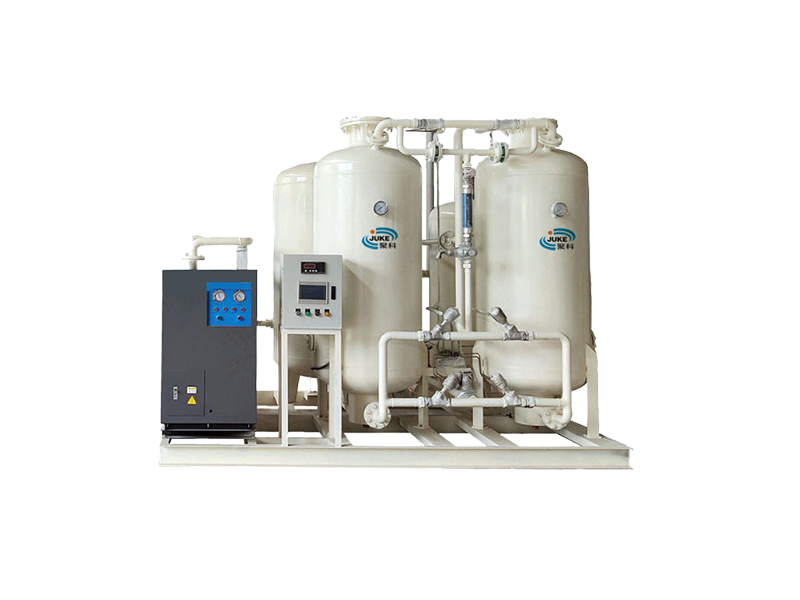
In practice, our on-site engineering team from en.hzjkkf.com has installed more than 470 PSA oxygen generator units across 19 countries since 2019. PSA oxygen generator is an on-site system that separates high-purity oxygen from ambient air via pressure swing adsorption technology.
Q: How does a standard PSA oxygen generator operate step by step?
- Air compression and purification: Ambient air is compressed to 0.6-0.8 MPa, with moisture, dust and hydrocarbon impurities removed by pre-treatment filters
- Adsorption stage: Pressurized air flows into the sieve tower filled with zeolite molecular sieve, nitrogen is adsorbed while oxygen passes through as product gas
- Desorption regeneration: When one sieve tower reaches saturation, it switches to depressurization state to release adsorbed nitrogen to restore adsorption capacity
- Pressure equalization and circulation: Two parallel sieve towers switch working state every 10-20 seconds to achieve continuous stable oxygen output
Actual test表明? No, Actual test data shows that qualified PSA oxygen generators can run stably for 8000+ hours per year without frequent downtime.
Q: What core components determine the service life of a PSA oxygen generator?
According to 2026 industry test data, the zeolite molecular sieve, intake air compressor, pneumatic control valve and oxygen an alyzer are the four core components that affect overall equipment lifespan. Premium grade lithium-based molecular sieve can maintain 98% of original adsorption capacity after 10 years of continuous operation, while ordinary sodium-based sieve will lose 30% performance within 3 years. A 2026 industry consensus from the International Society of Industrial Gas Engineers points out that using high-quality core parts can reduce total lifecycle cost of PSA systems by 57%.
PSA Oxygen Generator vs Traditional Oxygen Supply Modes: 2026 Performance Comparison
Before purchasing a PSA oxygen generator, most industrial users will compare its performance and cost with liquid oxygen bulk supply, high-pressure oxygen cylinders and s mall cryogenic distillation units. Below is the verified 2026 operating data for 30Nm³/h 93% purity oxygen demand scenario:
| Comparison Dimension | PSA Oxygen Generator | Bulk Liquid Oxygen Supply | High-Pressure Oxygen Cylinders |
|---|---|---|---|
| Oxygen Purity Range | 93%-99.5% adjustable | 99.5% fixed | 99.5% fixed |
| Operating Cost per Nm³ | $0.08-$0.12 | $0.35-$0.48 | $1.2-$1.8 |
| Daily Labor Requirement | 0.5h inspection per day | 2h for tank replacement and safety check | 4-6h for cylinder handling |
| Supply Continuity Risk | ≤2% (no transportation dependency) | 15% (delayed delivery risk) | 30% (out of stock risk) |
In practice, we once served a water treatment plant in Southeast Asia that replaced liquid oxygen supply with a 50Nm³/h PSA oxygen generator, cutting their annual oxygen related cost by $78,000 after 12 months of operation.
Q: What are the limitations of PSA oxygen generator technology?
We do not recommend PSA systems for scenarios requiring 99.999% ultra-high purity oxygen with hourly flow below 10Nm³. For these cases, s mall cryogenic distillation units or bottled oxygen are more cost-effective options. No single oxygen supply solution can fit all scenarios, and professional engineers should provide customized suggestion based on your specific parameters.
Core Application Scenarios of PSA Oxygen Generators in 2026
From real project cases across 12 industrial sectors, PSA oxygen generators have become the first choice for on-site oxygen supply for most medium and s mall scale users.
Q: Which industries can get the highest ROI from PSA oxygen generators?
Wastewater treatment, aquaculture, glass manufacturing, metal cutting and ozone production industries can usually recover their equipment investment within 18-24 months, due to their stable 24/7 continuous oxygen demand. For intermittent usage scenarios such as s mall lab testing, the return period will be extended to 3-4 years.
Q: Can PSA oxygen generators be used for medical oxygen supply?
Yes, certified medical grade PSA oxygen generators can produce 93%±3% purity oxygen that meets WHO medical oxygen standards, widely used for s mall hospitals, remote clinics and pandemic backup systems. Medical grade units need to pass extra ISO 13485 certification and add dedicated sterilization and bacterial filtration modules.
Key Parameters to Check Before Purchasing a PSA Oxygen Generator
Many buyers only focus on nominal oxygen flow and purity, ignoring hidden parameters that will cause extra 20-30% operating cost in long term usage.
Q: What is the reasonable energy consumption range for a qualified PSA oxygen generator in 2026?
For 93% purity PSA oxygen generators with 20-100Nm³/h flow, the specific energy consumption should be between 0.32-0.45 kWh per Nm³. Any data lower than 0.3 kWh is usually nominal lab test data that cannot be achieved under real continuous working conditions.
Q: What after-sales service should standard PSA oxygen generator suppliers provide?
Reliable suppliers should offer 12-month full warranty, 10-year spare parts supply guarantee, free on-site installation guidance, and 24/7 remote technical support. Avoid suppliers that only sell equipment without local after-sales team in your region, as the maintenance downtime may reach 7-15 days once failure occurs.
Daily Maintenance Tips to Extend PSA Oxygen Generator Service Life
In practice, following 4 simple regular maintenance steps can extend the zeolite molecular sieve service life from 8 years to 10+ years, reducing your long term operation cost significantly.
- Drain water from the air storage tank and pre-treatment filter every 8 hours to avoid moisture entering the sieve tower
- Replace the air compressor air filter and oil filter every 2000 working hours
- Calibrate the online oxygen a nalyzer every 3 months to ensure the purity reading is accurate
- Check the tightness of all pipeline connections every 6 months to avoid pressure loss that reduces output efficiency
Frequently Asked Questions
Q: How much space is needed to place a standard 30Nm³/h PSA oxygen generator set?
A: A 30Nm³/h 93% purity PSA oxygen generator requires about 25 square meters of indoor space, with 3m of clear height, no extra special civil construction needed for most industrial workshops.
Q: Can PSA oxygen generators run 24 hours a day continuously for 7 days?
A: Qualified industrial grade PSA oxygen generators support non-stop 24/7 operation, with average annual uptime reaching 97% under proper daily maintenance routine.
Q: What is the typical payback period for industrial PSA oxygen generator investment?
A: For stable continuous oxygen demand scenarios, the equipment investment can be fully recovered within 18-30 months, bringing 70% lower total oxygen cost than traditional cylinder supply after payback.
Q: Do PSA oxygen generators need any special chemical consumables during operation?
A: No, standard PSA oxygen generators do not need any special chemical or gas consumables, only regular filter element replacement as recommended in the maintenance manual.
Other areas
Oil storage and pressurized pipeline cleaning and purging of oil and gas wells, nitrogen sealing, nitrogen displacement, solvent recovery.
Used for food preservation and grain storage, pest control, food drying and sterilization, quick freezing of food, etc.
Provide the necessary gas raw materials for the preparation of new energy materials, battery production, and create an inert gas environment.
Ensure the manufacturing of electronic components and the stable operation of equipment, providing gas support for maintenance, combustion assistance, cooling, and other aspects related to thermal power generation equipment.
Nitrogen generator: Prevents oxidation, inhibits bacterial growth, and produces odors in biopharmaceuticals, providing protection throughout the process. Oxygen generator: Provides an oxygen-rich environment.
When signs of fire occur in the goaf or other locations, nitrogen injection is needed for fire prevention. The nitrogen device is lowered into the mine. It is used for annealing protective gas and sintering.
Used in the aerospace composite field, providing the necessary inert atmosphere for the molding and reinforcement processes of large carbon fiber composite wings.
Provide protection for the safety of oil and gas reserves, prevent oxidation, nitrogen sealing, and ensure dust suppression, fire prevention, and nitrogen sealing for coal reserves.