

Unlocking the Power of Nitrogen Generators for Your Business
Discover how nitrogen generators can enhance efficiency and reduce costs in various industries.
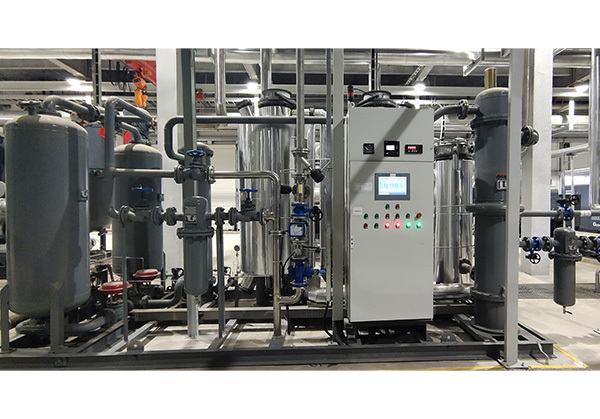
What Is a Nitrogen Generator?
In the simplest terms, a nitrogen generator is a device that produces nitrogen gas from the surrounding air. Using a process known as pressure swing adsorption (PSA), these machines separate nitrogen from oxygen and other gases present in the atmosphere. This technology has become a game-changer for businesses looking to optimize their operations and cut down on expenses.
Why Should You Consider a Nitrogen Generator?
So, why should you consider investing in a nitrogen generator? Well, let's break it down. First off, it provides a reliable source of nitrogen on-site, eliminating the need for costly gas deliveries. Imagine the convenience of having a steady supply of nitrogen right at your fingertips! 🚀
Cost-Effective Solution
Let's face it: running a business isn't cheap. By using a nitrogen generator, you can significantly reduce your operational costs. No more paying for bulk gas deliveries or dealing with storage constraints. You'll save money and time, and let's be honest, who doesn't want that?
Applications of Nitrogen Generators
From food packaging to pharmaceuticals, the applications of nitrogen generators are vast. In the food industry, nitrogen is often used to preserve freshness by displacing oxygen, which can lead to spoilage. On the other hand, the pharmaceutical sector utilizes nitrogen to create an inert atmosphere for sensitive materials. Talk about versatility!
Industrial Uses
Nitrogen plays a crucial role in various industrial processes. For instance, in the metal industry, nitrogen is used during laser cutting and welding to prevent oxidation. Similarly, in the electronics industry, it's used to create a controlled environment for manufacturing sensitive components. The list goes on!
How Does a Nitrogen Generator Work?
Curious about how these machines actually work? Here's the lowdown: a nitrogen generator employs a series of filters and adsorbent materials to separate nitrogen from other gases. Once the pure nitrogen is produced, it can be stored in tanks for immediate use. Simple, right?
Maintenance and Operation
Operating a nitrogen generator is not rocket science! Most models are user-friendly and require minimal maintenance. Regular checks and cleaning the filters are usually all it takes to keep your generator running smoothly. Easy peasy!
Final Thoughts
In a nutshell, investing in a nitrogen generator can be a smart move for businesses across various industries. Not only does it streamline operations and cut costs, but it also offers flexibility and reliability. If you're on the fence, consider the long-term benefits! Your wallet will thank you later!
Other areas
Oil storage and pressurized pipeline cleaning and purging of oil and gas wells, nitrogen sealing, nitrogen displacement, solvent recovery.
Used for food preservation and grain storage, pest control, food drying and sterilization, quick freezing of food, etc.
Provide the necessary gas raw materials for the preparation of new energy materials, battery production, and create an inert gas environment.
Ensure the manufacturing of electronic components and the stable operation of equipment, providing gas support for maintenance, combustion assistance, cooling, and other aspects related to thermal power generation equipment.
Nitrogen generator: Prevents oxidation, inhibits bacterial growth, and produces odors in biopharmaceuticals, providing protection throughout the process. Oxygen generator: Provides an oxygen-rich environment.
When signs of fire occur in the goaf or other locations, nitrogen injection is needed for fire prevention. The nitrogen device is lowered into the mine. It is used for annealing protective gas and sintering.
Used in the aerospace composite field, providing the necessary inert atmosphere for the molding and reinforcement processes of large carbon fiber composite wings.
Provide protection for the safety of oil and gas reserves, prevent oxidation, nitrogen sealing, and ensure dust suppression, fire prevention, and nitrogen sealing for coal reserves.