

Knowledge Sharing: Pressure Vessel Standards in Nitrogen Generators—GB150 Standard and ASME Standard
Nitrogen generators use pressure vessels that conform to either GB150 or ASME standards. The design standard for the pressure vessel can be flexibly selected based on the user's local market requirements.
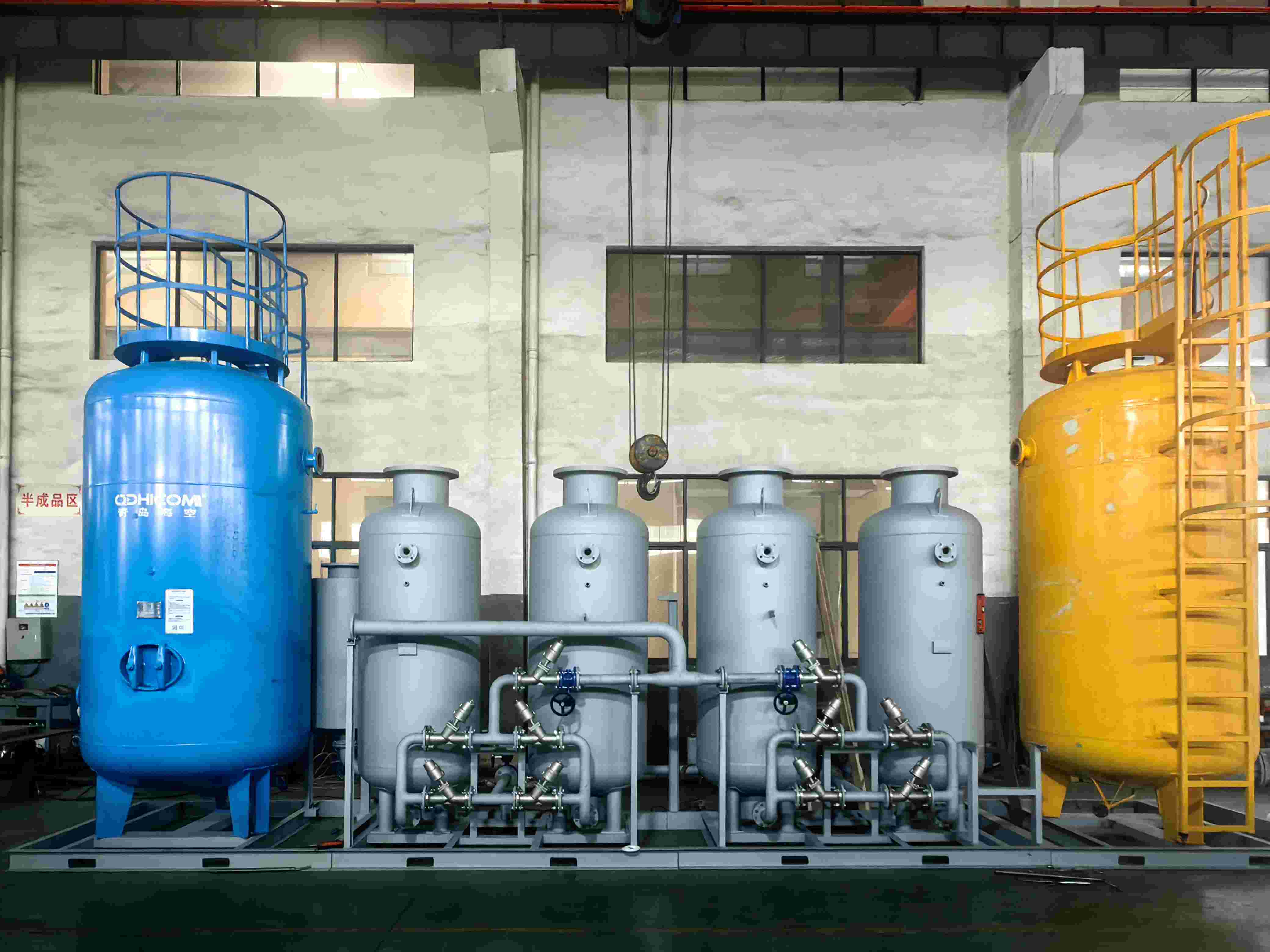
In industrial production, the nitrogen generator is the core equipment for producing nitrogen. Its internal pressure vessel is as crucial as the "heart," directly affecting the equipment's safety and stability. In the design, manufacturing, and inspection of nitrogen generator pressure vessels, GB150 and ASME standards are two influential specifications. They originate from China and the United States respectively, with different technical concepts and application scenarios. Let's delve into the differences and connections between these two major standards to unveil the mysteries of nitrogen generator pressure vessel standards.
I. Basic Overview of the Two Standards
1.1 GB150 Standard: The "Cornerstone" of China's Pressure Vessels

GB150, full name "Pressure Vessels," is a fundamental standard in China's pressure vessel field, jointly issued by the State Administration for Market Regulation and the Standardization Administration. This standard regulates aspects such as materials, design, manufacturing, inspection, and acceptance of pressure vessels. It applies to steel pressure vessels with a design pressure of no more than 35 MPa and a design temperature range of -20℃ to 350℃. It is a core principle that Chinese nitrogen generator manufacturers must follow. It fully combines domestic industrial production levels and safety management requirements, building a solid defense to ensure the quality and safety of domestic pressure vessels.
1.2 ASME Standard: The Authoritative Work of the American Society of Mechanical Engineers

ASME, the American Society of Mechanical Engineers standard, is a highly recognized pressure vessel standard system internationally. The ASME Boiler and Pressure Vessel Code (BPVC) covers regulations for the entire process, from material selection and design calculations to manufacturing and inspection. Its application range is wide, including not only pressure vessels under conventional pressure and temperature conditions but also detailed guidance on the design and manufacturing of equipment under extreme conditions such as high temperature, high pressure, and low temperature. Due to the United States' technical status in mechanical engineering, the ASME standard is widely adopted in many countries and regions globally, becoming an important reference standard in the international pressure vessel industry.
II. Core Differences Between GB150 and ASME Standards
2.1 Design Concepts and Methods
The GB150 standard adopts the "elastic failure design criterion" and the "instability failure design criterion," emphasizing the use of the material's elastic limit and the structure's stability as design bases, using safety factors to ensure the safety of the pressure vessel. This design method focuses on the static evaluation of material strength and structural stability, ensuring the equipment has high safety redundancy while meeting the regular needs of domestic industrial production.
The ASME standard is more inclined towards the "plastic failure design criterion," allowing the pressure vessel to enter the plastic deformation stage to a certain extent. It uses more precise stress analysis methods, such as finite element analysis, to evaluate the vessel's load-bearing capacity. This design concept, while ensuring safety, can more fully utilize the material's performance, optimize the pressure vessel's structural design, and achieve lightweight and cost control.
2.2 Material Selection and Requirements
The GB150 standard has stricter regulations on the materials used for pressure vessels, clearly defining the types, grades, chemical composition, and mechanical performance indicators of the materials. It also requires that the materials must meet relevant domestic standards and certification requirements. For example, for the use of steel plates, there are detailed regulations on its smelting method, impact test temperature, and impact absorption energy, ensuring the reliability of the material in the domestic industrial environment.
The ASME standard is more flexible in material selection. It not only recognizes US domestic material standards but also widely accepts materials from other internationally renowned standards. ASME provides abundant material data and usage guidelines, allowing users to choose the most suitable materials based on actual operating conditions and performance requirements, provided that relevant technical conditions are met, providing greater space for the application of innovative materials.
2.3 Manufacturing and Inspection Requirements
In terms of manufacturing processes, the GB150 standard has clear and specific regulations on welding processes, non-destructive testing methods, and qualification levels. For example, for different types of welded joints, it specifies the corresponding non-destructive testing proportions and qualification standards to ensure that the welding quality meets the requirements. During the manufacturing process of pressure vessels, it emphasizes process control and the establishment of a quality assurance system, ensuring product quality through strict inspection and acceptance procedures.
The ASME standard also emphasizes quality control during the manufacturing process, but there are differences from GB150 in specific inspection methods and qualification standards. The ASME standard pays more attention to the traceability of the manufacturing process and the effectiveness assessment of the quality assurance system. In non-destructive testing, in addition to conventional testing methods, it also encourages the use of advanced testing technologies and methods. Furthermore, the ASME standard has unique requirements for welder qualification certification and manufacturer qualification review.
III. Application Scenarios of the Two Standards in Nitrogen Generators
3.1 Application of the GB150 Standard
In the domestic nitrogen generator market, the GB150 standard dominates. The vast majority of domestic nitrogen generator manufacturers strictly follow the GB150 standard when designing and manufacturing pressure vessels. This is because the GB150 standard is closely integrated with domestic industrial regulations and safety supervision systems, conforming to the production habits and technical levels of domestic enterprises. For nitrogen generators aimed at the domestic market and used in general industrial fields such as food packaging, chemical production, and electronics manufacturing, pressure vessels designed and manufactured using the GB150 standard can meet the needs and safety requirements of domestic users while facilitating production management and quality control for enterprises.
3.2 Application of the ASME Standard
The ASME standard has significant advantages in international markets and some high-end application fields. When nitrogen generator companies need to expand into international markets, especially exporting to regions with high recognition of the ASME standard such as North America and Europe, using the ASME standard to design and manufacture pressure vessels is a necessary condition. In addition, in some special industries with extremely high requirements for equipment performance and safety, such as aerospace, deep-sea operations, and high-end scientific research, the ASME standard, with its advanced design concepts and strict quality control system, can better meet the needs of these extreme operating conditions. For example, the pressure vessels of nitrogen generators supporting the aerospace field are designed and manufactured using the ASME standard to ensure stable operation in complex environments such as high vacuum and extreme temperatures.
IV. Conclusion
The GB150 and ASME standards each have their own characteristics and advantages, playing important roles in different market environments and application scenarios. For nitrogen generator manufacturers, a thorough understanding of the differences between these two standards and the rational selection of appropriate standards based on product market positioning and user needs are key to enhancing product competitiveness and ensuring the safe and reliable operation of equipment. In the future, with the continuous development of global industrial technology and the increasingly frequent international exchanges and cooperation, the two standards will continue to improve through mutual learning, providing stronger technical support for the development of nitrogen generators and other pressure vessel equipment.
If you have further questions about nitrogen generator pressure vessel standards or want to learn more about related knowledge, please feel free to leave a message in the comments section!
Other areas
Oil storage and pressurized pipeline cleaning and purging of oil and gas wells, nitrogen sealing, nitrogen displacement, solvent recovery.
Used for food preservation and grain storage, pest control, food drying and sterilization, quick freezing of food, etc.
Provide the necessary gas raw materials for the preparation of new energy materials, battery production, and create an inert gas environment.
Ensure the manufacturing of electronic components and the stable operation of equipment, providing gas support for maintenance, combustion assistance, cooling, and other aspects related to thermal power generation equipment.
Nitrogen generator: Prevents oxidation, inhibits bacterial growth, and produces odors in biopharmaceuticals, providing protection throughout the process. Oxygen generator: Provides an oxygen-rich environment.
When signs of fire occur in the goaf or other locations, nitrogen injection is needed for fire prevention. The nitrogen device is lowered into the mine. It is used for annealing protective gas and sintering.
Used in the aerospace composite field, providing the necessary inert atmosphere for the molding and reinforcement processes of large carbon fiber composite wings.
Provide protection for the safety of oil and gas reserves, prevent oxidation, nitrogen sealing, and ensure dust suppression, fire prevention, and nitrogen sealing for coal reserves.