

A Complete Guide to Nitrogen Generator Types and Application Scenarios
In industrial production and numerous scientific research and commercial fields, nitrogen, as an extremely important inert gas, has a wide range of applications. Nitrogen generators, as the core equipment for producing nitrogen, come in various types, with different types suitable for different work scenarios. Let's delve into the types of nitrogen generators and their corresponding work scenarios.
In industrial production and numerous scientific research and commercial fields, nitrogen, as an extremely important inert gas, has a wide range of applications. Nitrogen generators, as the core equipment for producing nitrogen, come in various types, with different types suitable for different work scenarios. Let's delve into the types of nitrogen generators and their corresponding work scenarios. 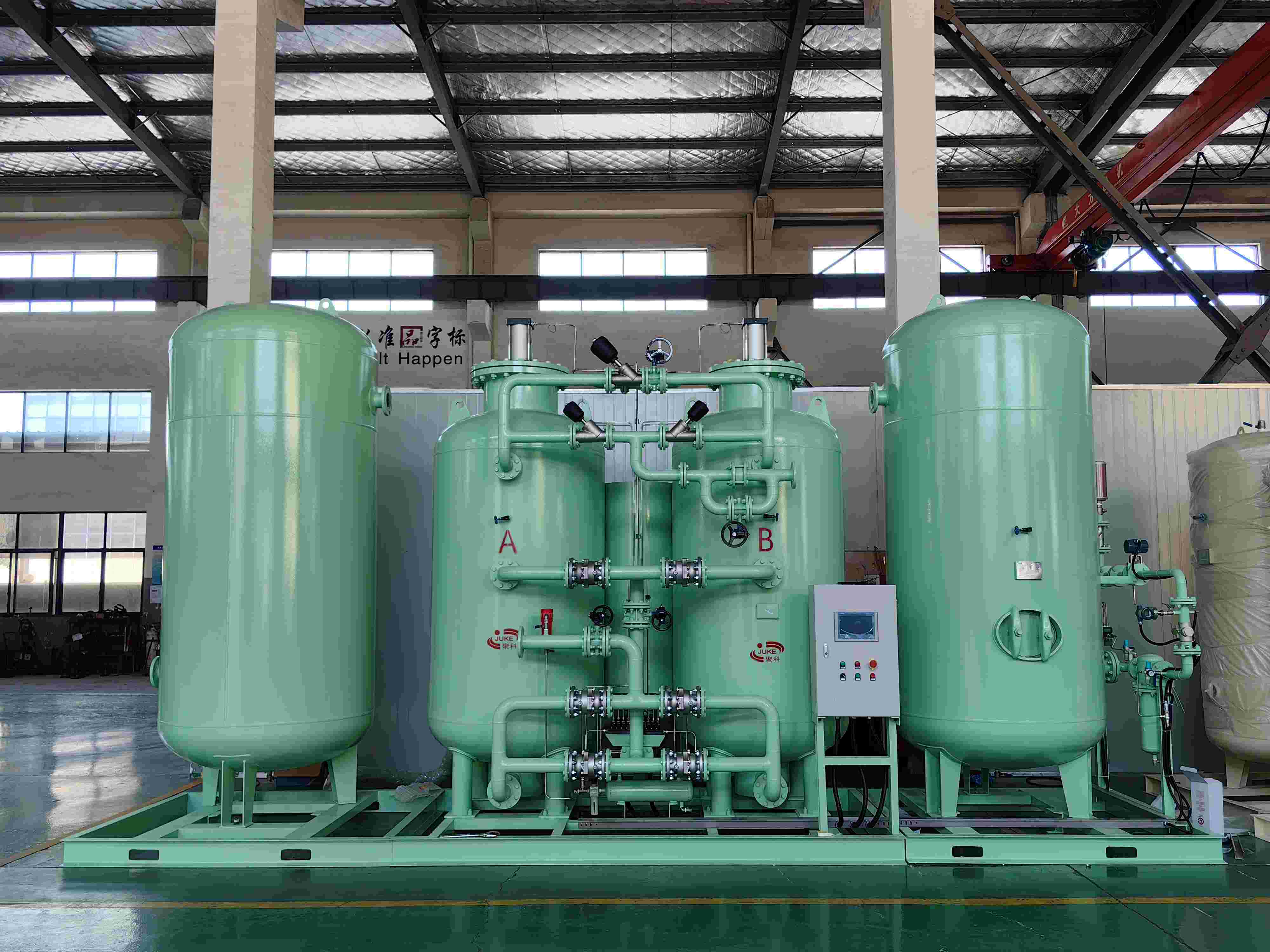
1. Pressure Swing Adsorption Nitrogen Generator (PSA Nitrogen Generator)
Working Principle
Pressure swing adsorption nitrogen generators utilize the characteristic that molecular sieves have different adsorption capacities for nitrogen and oxygen in air under different pressures to achieve nitrogen production. Under high pressure, the molecular sieve preferentially adsorbs oxygen and other impurity gases, allowing nitrogen to become enriched; when the pressure is reduced, the adsorbed impurity gases are desorbed and discharged, and the molecular sieve recovers its adsorption capacity, thus creating a cycle to produce nitrogen.
Work Scenarios
Chemical Industry: In the production of chemical products, many reactions require an oxygen-free or low-oxygen environment to prevent oxidation reactions from interfering with product quality. For example, in the production of plastics such as polypropylene and polyethylene, the high-purity nitrogen provided by PSA nitrogen generators is used to displace the air in the reaction kettle, creating an oxygen-free environment, ensuring that the polymerization reaction proceeds smoothly, and improving the stability and quality of the product.
Food Industry: Food preservation relies on nitrogen. PSA nitrogen generators can be used for nitrogen filling in food packaging, displacing the air in the packaging bag, inhibiting microbial growth, and extending the shelf life of food. PSA nitrogen generators are often seen next to production lines for packaged snacks such as potato chips and nuts. At the same time, in the production of liquid foods such as edible oil and beverages, nitrogen can be used to remove oxygen from pipelines and storage tanks to prevent product oxidation and rancidity.
Electronics Industry: The manufacture of electronic chips requires extremely high environmental purity. The nitrogen produced by PSA nitrogen generators is used for atmosphere protection in chip manufacturing workshops to prevent chips from being oxidized during processing, ensuring chip performance and yield. In the semiconductor packaging process, nitrogen can also prevent moisture from entering the package, affecting the electrical performance of the chip.
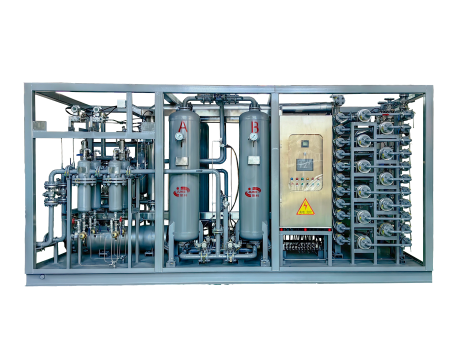
2. Membrane Separation Nitrogen Generator
Working Principle
Membrane separation nitrogen generators separate nitrogen based on the difference in permeation rates of different gases in polymer membranes. When compressed air passes through the membrane assembly, oxygen, carbon dioxide, and other small-molecule gases permeate the membrane more easily than nitrogen, thus becoming enriched on the other side of the membrane, while the nitrogen concentration in the gas that does not permeate the membrane continuously increases, achieving nitrogen production.
Work Scenarios
Automotive Industry: Membrane separation nitrogen generators excel in nitrogen filling for car tires. Nitrogen filling tires reduces the thermal expansion coefficient of the gas inside the tire, reducing the risk of tire bursts and improving driving safety. On automotive production lines, membrane separation nitrogen generators can provide a stable nitrogen source for tire inflation stations. Their compact size and ease of operation make them ideal for the limited space layout of automotive production workshops.
Coal Mining Industry: Coal mine underground operations have a risk of gas explosions, requiring a large amount of nitrogen for fire prevention, fire extinguishing, and inerting goaf areas. Membrane separation nitrogen generators can be installed underground or on the surface to quickly produce nitrogen and transport it through pipelines to the required areas. Their strong adaptability to harsh environments allows them to operate stably under complex geological conditions and in humid, dusty environments in coal mines.
Medical Industry: Some medical equipment, such as magnetic resonance imaging (MRI) equipment, requires nitrogen as a coolant. Membrane separation nitrogen generators can produce nitrogen within the hospital to meet the continuous demand for nitrogen from MRI equipment. Compared to the traditional liquid nitrogen supply method, it is more economical, convenient, and ensures the stability of nitrogen supply. 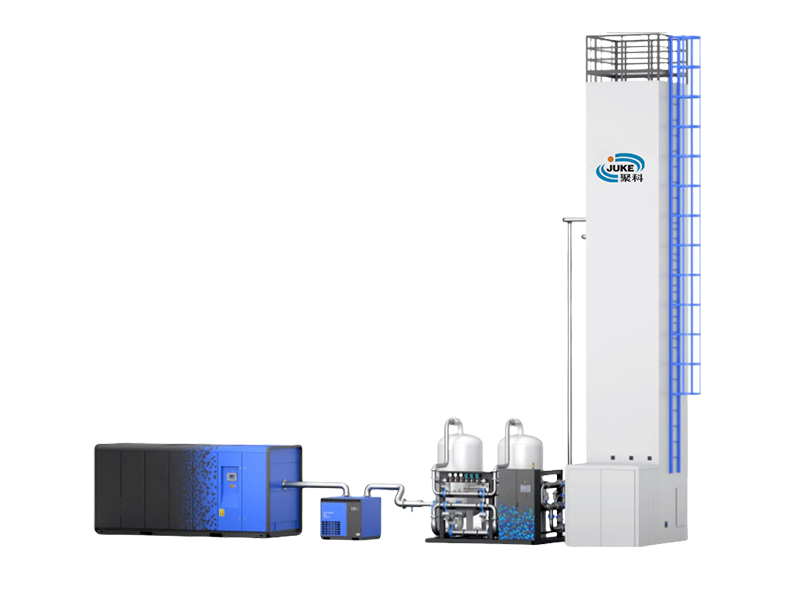
3. Cryogenic Air Separation Nitrogen Generator
Working Principle
Cryogenic air separation nitrogen generators liquefy air by cooling it to a low temperature (approximately -196℃), and then utilize the difference in boiling points of oxygen and nitrogen (oxygen boiling point -183℃, nitrogen boiling point -196℃) to separate them through multiple distillations in a rectification column, ultimately obtaining high-purity nitrogen.
Work Scenarios
Steel Industry: In the steel smelting process, the large amount of high-purity nitrogen provided by cryogenic air separation nitrogen generators is used in converter top blowing and out-of-furnace refining of molten steel. During converter steelmaking, nitrogen can be used as a stirring gas to promote uniform composition and temperature of the molten steel, improving the quality of the molten steel; during out-of-furnace refining, nitrogen can prevent secondary oxidation of the molten steel, remove harmful impurities, and improve the performance and quality of the steel.
Aerospace Industry: The aerospace field has extremely stringent requirements for the purity and flow rate of nitrogen. Cryogenic air separation nitrogen generators can produce ultra-high purity (above 99.999%) nitrogen, used for testing aero-engines, inflating aircraft tires, and purging rocket fuel systems. Its ability to stably supply large quantities of high-purity nitrogen meets the large-scale and high-precision production needs of the aerospace industry.
Large-scale Chemical Park: For chemical parks with a large number of chemical enterprises that require large-scale nitrogen supply, cryogenic air separation nitrogen generators have obvious advantages. It can simultaneously provide sufficient nitrogen to multiple chemical enterprises, realizing resource sharing through pipeline transportation. In the production of chemical products such as ammonia and methanol, the nitrogen provided by cryogenic air separation nitrogen generators participates in the reaction as a raw material gas, ensuring the continuous and stable operation of chemical production.
Different types of nitrogen generators, with their unique working principles, play a key role in numerous industries. Understanding their characteristics and applicable work scenarios helps enterprises choose the most suitable nitrogen generation equipment according to their own needs, improving production efficiency, reducing costs, and promoting the development and progress of the industry. If you have any questions about the selection or application of nitrogen generators, please feel free to discuss them with us in the comments section.
Other areas
Oil storage and pressurized pipeline cleaning and purging of oil and gas wells, nitrogen sealing, nitrogen displacement, solvent recovery.
Used for food preservation and grain storage, pest control, food drying and sterilization, quick freezing of food, etc.
Provide the necessary gas raw materials for the preparation of new energy materials, battery production, and create an inert gas environment.
Ensure the manufacturing of electronic components and the stable operation of equipment, providing gas support for maintenance, combustion assistance, cooling, and other aspects related to thermal power generation equipment.
Nitrogen generator: Prevents oxidation, inhibits bacterial growth, and produces odors in biopharmaceuticals, providing protection throughout the process. Oxygen generator: Provides an oxygen-rich environment.
When signs of fire occur in the goaf or other locations, nitrogen injection is needed for fire prevention. The nitrogen device is lowered into the mine. It is used for annealing protective gas and sintering.
Used in the aerospace composite field, providing the necessary inert atmosphere for the molding and reinforcement processes of large carbon fiber composite wings.
Provide protection for the safety of oil and gas reserves, prevent oxidation, nitrogen sealing, and ensure dust suppression, fire prevention, and nitrogen sealing for coal reserves.